Races – Slowing Down

After a good run at CraicFest, I have slowed down, by almost a minute in the following two races.

The first race was the JB Blastoff race on March 29. This was the second race in the Race Around Waltham series. The Race Around Waltham series is made up of several 5k to 4 mile races. Runners or volunteers who attend enough races can earn tee shirts, jackets, and other prizes. You can read more about it here: http://www.rawseries.org/index.html.

This race came after two days of fencing tournaments. That definitely slowed me down, but the course itself was flat and should have been relatively quick. Still my time was 26:15. (I did place sixth in one of the fencing tournaments, which was a record placement for me.)

The next race was April 19. The Watertown Police Finish Strong 5-K is held every year around the anniversary of the capture of the Boston Marathon bombers. I was in Watertown while the manhunt was going on, so I like to do this race. It benefits Watertown Police Supervisors’ Association, Watertown Police Relief Association, youth community programming and school safety initiatives. I did not get to do the blood drive this year, but if I had been able to, I would have also donated blood.

My time here was 26:55. It was about a minute off the Craicfest time. I had also fenced the Friday before and took third in that tournament. So, maybe the activities in the days before slowed me down, but I think there is likely another reason.

The real problem is probably lack of consistency in my training. Now that the snow has melted and the streets are clear, I need to make more time for running. If anyone out there has suggestions for maintaining consistency or running plans for getting fast, please let me know.

Posted in Races | Tagged , , , | Leave a comment

Races – Cambridge 5K Craicfest: Faster Than I Thought

My first March race is in the books. Today I ran the Cambridge 5K Craicfest race.

Craicfest Sign

This was a flat, fast course through Cambridge,  Mass. Eddie O’Connor and his team at Cambridge 5k always put on well-organized races. The races are well laid out, the packet pickups are well organized, and they throw good after parties with plenty of local breweries. Because of the weather, this race after party was actually in part of the garage under the CambridgeSide Galleria Mall. We also were able to wait in the mall before the race. (Remember what I wrote about waiting for a race to start in the cold?)

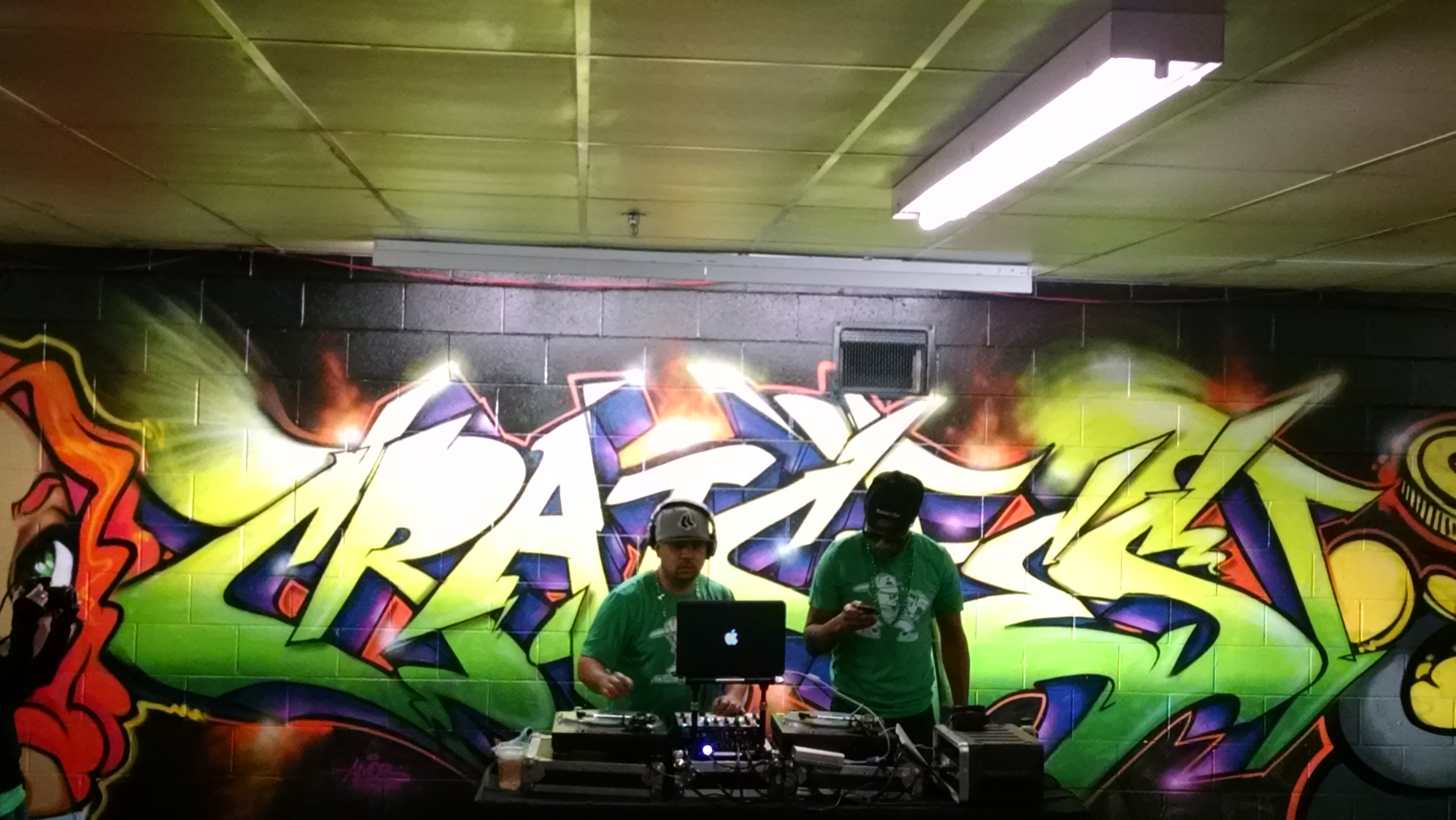
Craicfest DJ

The DJ at the after party, with a special Craicfest mural.

If you get a chance to run one of the Cambridge 5K races, then you should do it. It will be a good racing experience.

For this race, my chip time was 25:55, giving me a pace of 8:21! On my own GPS watch, I had myself moving a bit slower, but I guess that is to be expected. I did not expect to turn in such a good time, especially given that my race time in February was 26:38. I think part of the good time was due to the course being relatively easy. I also think that having much of the snow melted means that there was room to maneuver around slower runners. Finally, the fencing as alternate cardio, hiking in the snow, and shoveling all helped to keep me in some kind of shape.

After this race, I did something I have meant to do a few times, but not always followed through. I sent an e-mail to CambridgeSide Galleria to thank them for hosting the race and to the Cambridge Police to thank them for helping make the race happen. Here is what I sent to the police.

Dear Cambridge Police,

Thank you to all the officers and staff who helped out the the Cambridge 5k Craicfest race today (March 15, 2015). While I try to thank the officers, it can be tough while you are out there running. So, I thought I should send an e-mail. Thanks for supporting the racer and having officers out there to direct traffic and runners and keep us safe.

Sincerely,

Ben Jackson, a runner

We should take a minute to thank the volunteers and hosts and people who make the races possible. They are out there for us as runners. It also makes the world a nicer place when we all show some appreciation.

Another Craicfest Mural.

Another Craicfest mural.

Posted in Races | Tagged , , | Leave a comment

Digression – Why I Don’t Do Marathons.

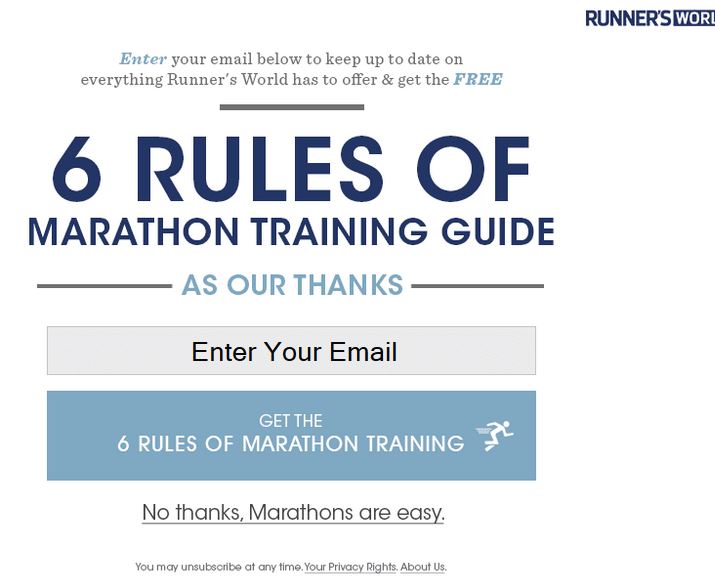
When it comes to be a runner, it can sometimes seem like a marathon is the only valid race to do. I went to the Runner’s World Web site to read an article about why the 5K is awesome. But before I could view the article, this advertisement popped up.

typical runners world

The opt out was “No thanks, Marathons are easy.” It wasn’t even “No thanks, Marathons are not my thing.” The underlying assumption was “of course you want to run a marathon.”

Guess what? I don’t.

I don’t have any interest in doing a marathon, despite the fact that nearly every running publication and runner’s group is about training for a marathon.

One of the reasons I started this blog is because I wanted to have a place where the 5K runner could have something that focused on this distance, rather than constantly needing to hear that we should always have to go 37+ kilometers. So, here are 5 reasons that I run the 5K and not the marathon.

1. The Challenge of the 5K: Many marathoners decide to tackle the distance for the challenge it represents. For me, though, going further does not represent a challenge I want to tackle. As a ultra-marathon runner I know told me, it is easier to train people to go farther than it is to train them to go faster. For me, faster represents a more difficult challenge, so that is the challenge I am interested in pursuing. To go faster, I need to train smarter, harder, and with more variety than I would need to go farther. No disrespect to long distance runners, but I feel like if I put in the time, then I could train myself to go farther.

2. The Time to Train for the 5K: Putting in the time to train for a 5K is much shorter than it would take to train for a marathon. The marathon runners that I know have spent massive amounts of time training for that distance to the point where they work, eat, sleep, and run. A 5K, especially when you are training to go fast, has a much more compact training schedule. Intervals are much shorter (though maybe equal in suck) as the long runs that take up much of a marathoner’s weekend.

3. The Time to Run a 5K: I can run a 5K in under half an hour. Now, as I said above, I think I could train up to do a marathon. But, I don’t think I could set a record time. It would probably take me several hours to actually run one. With a 5K, I can do a race, drink a beer, and have the rest of the day to do something else. I have run a 5K and gone on to do a fencing tournament.  Marathons take a little longer to recover from and get back into the swing of life. Yes, I know that some runners have done 50 marathons in 50 states over 50 days or some other record setting feet of the same, but I know I am not that person.

4. The Variety of 5K Races: Marathons are 26.2 mile races that vary in their courses and their histories. These can be quite special. For instance, no one can deny the gravitas of the Boston Marathon, especially after the events of 2013. (As a Boston area resident, I certainly recognize it.) But when it comes to 5K races, there is a variety in the races that range from highly technical trail runs, to fast road races, to obstacle courses. The options to do different kinds of races appeals to me, whether it is a competitive race or just a run for fun.

5. The Fun of 5K Races: When it comes to 5K races, you can do them with your friends and have a good time instead of everyone hobbling to an ice bath afterwards. For some runners, the alone time is the point. They like being out on the course on their own, challenging themselves. The 5K race is accessible, and there is usually a party afterwards. Either we all run together, or we might agree to meet at the beer tent afterwards. Either way, it becomes a group activity. We talk about the race, we talk about the course, and spend some time together after the race. It becomes a social activity rather than just a chase for a PR.

So those are my reasons, and this is my blog about doing this kind of running. I hope that marathoners would get something out it, but this is for those of us who go the short distance. By the way, if you want to see the article I was chasing when I got the above advertisement, check out this link : 10 Reasons why the 5K is Freaking Awesome. Lauren Fleshman doesn’t know it, but she became my spirit guide for running with this article. It helped inspire this blog. If you’ve decided to stick with 5Ks, then let me know why. If you use 5Ks as a stepping stone to marathons, you are welcome to try to convert me, but really, it’s not going to happen. Still, happy running trails to you, whatever your chosen distance.

Posted in Digressions | Tagged , , , , | 2 Comments

Gear – How Do I Carry My Keys?

One of the perennial problems with being a runner is figuring out how to carry the stuff you need. Most running clothes don’t have pockets, or if they do, then the pockets aren’t very deep. The other struggle is that if you have too much in a pocket, then the weight of the stuff starts to pull your pants down.

While there are a variety of ways to solve this problem, my favorite is the SPI (Small Personal Item) Belt. (Now, I need to add my gear disclaimer. Any piece of gear I review on this blog is because I have purchased it and used it. I am not sponsored by anyone, and I have received no freebies. I would disclose any connection I might have to a company that produces any gear I review.)

With the disclaimer out of the way, let me show you my SPI Belt.

IMG_20150302_215714641[1]

It is what it says: a belt with an expandable zipper pocket for small personal items. I use it for my keys, a bit of cash, and once or twice have put a phone in there. There are several sizes and multiple colors. I like it because the belt holds just enough stuff, discouraging carrying extra stuff. It can be worn over your clothes and so doesn’t get particularly sweaty. It also can sit at your natural waist and so your aren’t losing your running pants like you would if you had you keys in your pocket.

I also like the fact that it is made in the USA. I am big on buying Made in the U.S.A. goods where I can. So, this attribute is a nice bonus for the SPI Belt.

If you are inspired to try one, you can get them here in many colors: http://www.spibelt.com/.

The company also makes shoe pockets, messenger bags, and other items of holding. I have only used the SPI Belt, so I can say much about the others. But if you try their other gear, let me know what you think.

Posted in Gear | Tagged , , | 1 Comment

Training – How Do I Run in This?

IMG_20150215_113331589

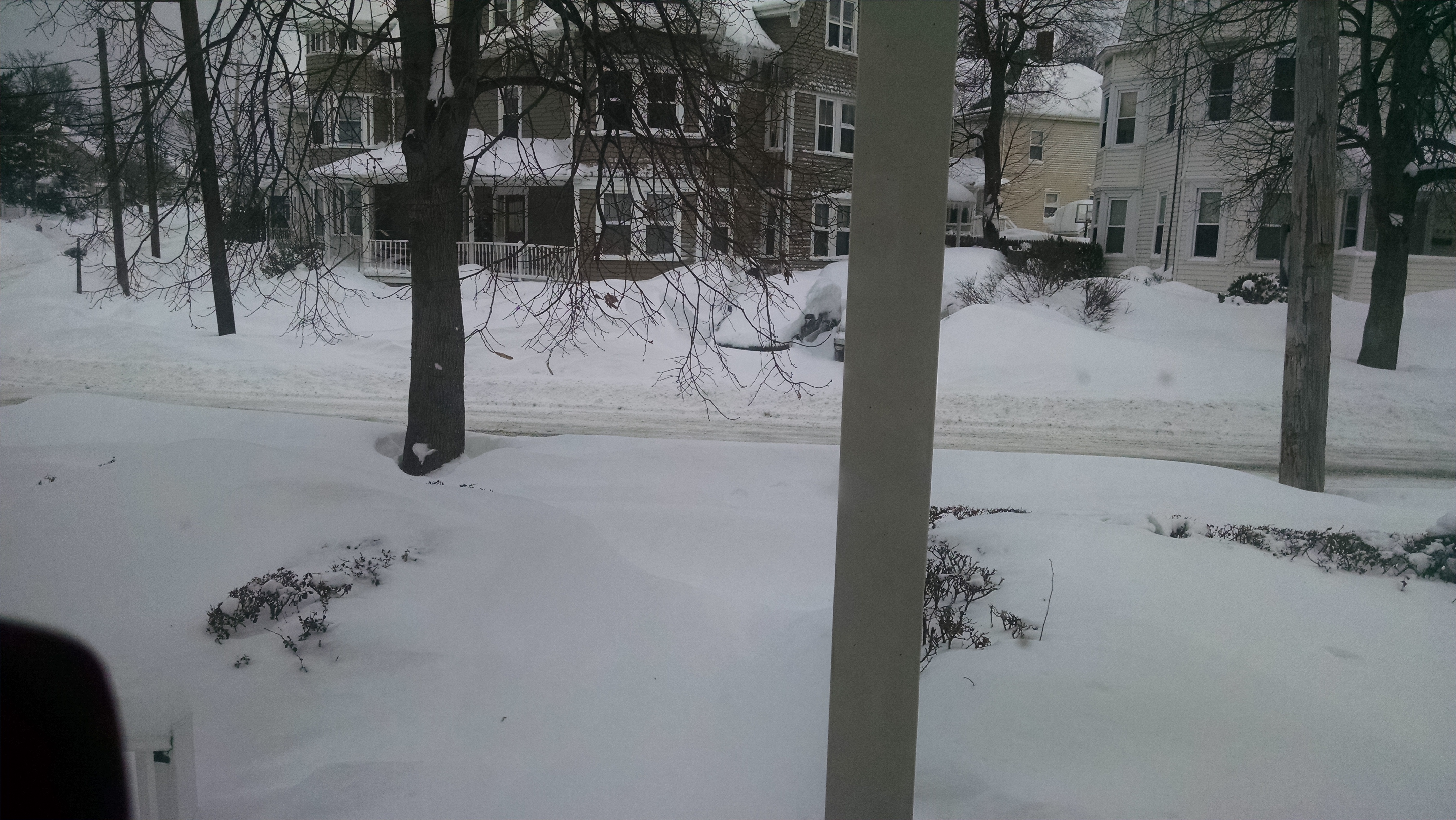
It is still winter in many parts of the country with no signs of relief coming soon. In the Boston area, where I live, we have had over 101 inches of snow. This means that running outside is a challenge. While some sidewalks have been shoveled (personally, I try to get mine down to the pavement every time), there are still massive snow drifts and mounds of snows, particularly on corners, where plows have pushed the snow off the roads.

So, the question for a runner is “how do I run in this?”

We as runners have a few options. Here is how I see it shaping up.

  1. Do nothing, wait for it to melt. Now clearly, this is not an option for those of us who are trying to get a little better and a little faster. But I think we need to recognize that there are challenges to this weather.


  1. Run outside anyway. Just get out there and go. Run in the streets. Wade through the drifts. Suffer through the cold and run. I know some people who do this, and some who have found that it is a massive stress relief to get out there again. However, this is not for me. I have seen runners out in all kinds of weather, on narrow slippery roads, taking their chances with cars. Part of this must be because they are training for the Boston marathon, which is relatively early in the year. But again, for those of us interested in doing 5-Ks, it is not totally necessary.


  1. Run on a treadmill. I don’t know about you, but I find it hard to run on treadmills. I don’t like not going anywhere. I don’t like the noise of the treadmills, and I just start to feel closed in. I have a tough time running with headphones. They seem to fall out of my ears. So, this option is not the best for me, but it might work for you. The advice I have heard is to make sure that you set the incline to be at least .5% so that there is some resistance to make it closer to what you would have running outside.


  1. Do something else inside. This is an option for people who, like myself, don’t want to get on treadmills and don’t want to run outside. The trick is to find an indoor sport that gets you breathing hard. It could be indoor soccer, basketball, Zumba classes, whatever. As long as you are getting some kind of cardiovascular workout, it will keep you from atrophying. My indoor cardio of choice right now is fencing.


  1. Do something else outside. Cross country skiing, snowshoeing, downhill skiing –all are options to help maintain fitness. Perhaps the simplest thing to do is bundle up and go out for a walk. Do your errands on foot. If you can navigate the drifts and the unshoveled walks, then you will probably get a workout, especially once you factor in the heavy boots and clothes.

Also, I have just a few piece of advice if you do decide to venture out in the cold weather.

First, wear layers. You know this already, but proper layering is everything. Cody Lundin, a survival instructor, lays out a layering system in his book 98.6 Degrees. The Art of Keeping Your Ass Alive. I followed it to the letter when I was a score keeping at a winter biathlon and never really felt cold. I recommend this book to people who are going to be in the outdoors a lot. You will need to adapt his layering system for running, but have a dark colored base layer of wool, silk, or polypropylene, insulation layers of wool or materials like fleece, and an outer layer of wind resistant material will help keep you warm and dry.

I have another tip that I picked up from a mountain biker who got it from a mountain climber. If you are going to be outside in the cold for long periods of time, then coat your feet with antiperspirant. It keeps them from sweating and that keeps them dry. Dry feet are warmer feet.

Finally, the Marines have a cold weather acronym that Lundin also uses: C.O.L.D.

Keep yourself and your clothing Clean.

Avoid Overheating.

Wear clothing and equipment Loosely. Wear clothing loose and in layers in Lundin’s version.

Stay Dry.

As soon as the sidewalks and paths are passable, I will be back out there running. I think we all should be. In the meantime, with any luck, these ideas give you something to work with. I welcome more cold weather tips to add to these.

Posted in Training | Tagged , , | Leave a comment

Cross Training – Why We Can’t Just Run: It’s Not One Thing

IMG_4488

One of the reasons that I run is to be healthy and physically fit, but that is not something that we can achieve by running alone. Many people have their favorite physical activity or training, and whether it is running, weightlifting, yoga, or something else, they tend to think that is all they need to do.

Cross Training is one of the major categories of this blog because being healthy and physically fit involves more than one kind of training. I ran across this description in an old Army manual about physical training.

“Since physical fitness includes strength, endurance, agility, and coordination, it is apparent that no one activity is sufficient for its full development.”[i]

As part of my training, I try to include weight lifting, calisthenics, stretching, swimming and fencing. Of course, the running also complements those things as well, promoting cardiovascular endurance. I don’t stretch enough, and sometimes it is hard to fit in all the different kinds of training that I would like to do, but the goal is to avoid being one-dimensional. The goal is also to be the best person that I can be.

Here is a quote from a book on kung fu, which I think nicely sums up what health and fitness can be.

“The second great benefit of practicing kung fu is health and fitness. By health, I do not mean merely being free from illness; I mean an ability to eat with relish, to sleep soundly, to work energetically, to think clearly, and to be calm yet alert. By fitness, I do not mean just the brute strength to do heavy work; I mean the ability to run and jump, to withstand heat, cold or wind in the open, to react speedily, to endure hard work, and to concentrate for some time without feeling fatigue.”

Sounds like a good way to live, doesn’t it? At the same time, I know that it can sound overwhelming. So where do we start?

One good starting point is the Presidential Fitness Test. It is the adult version of the one you may have encountered in school (if you went to school in the United States). The test measures four things: cardiovascular fitness, muscular strength and endurance, flexibility, and body composition. You can find the test and a way to see how you measure up at http://www.adultfitnesstest.org

It makes a distinction between different kinds of fitness and lets people start off at whatever level makes sense.

Cardiovascular fitness is measured by a mile and a half run. You can also do a walk test if you are not at the running level yet.

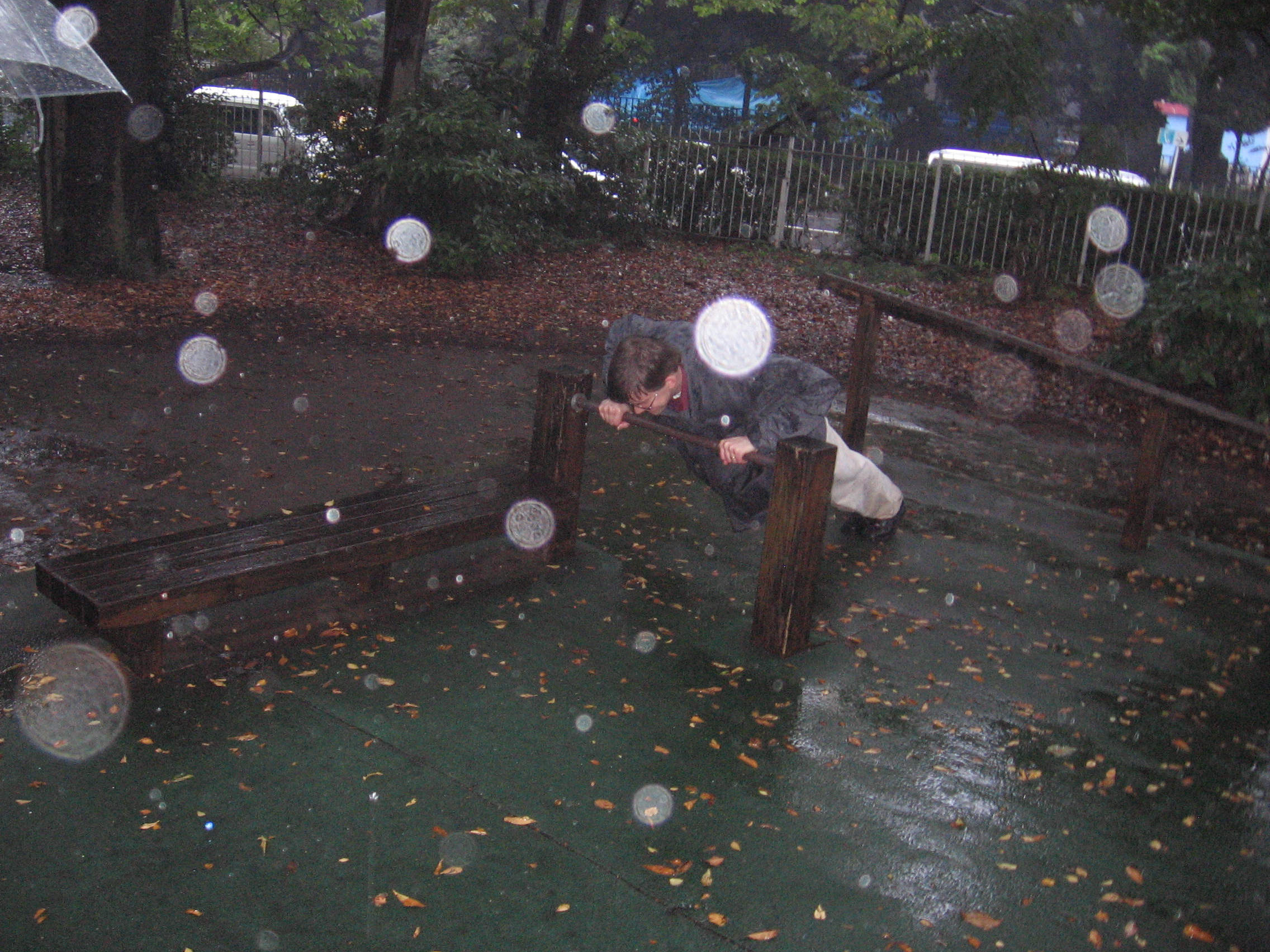
Muscular strength and endurance is measured by push-ups and sit-ups. Push-ups are a good way to test upper body strength. They have the added benefit of being the way you catch yourself should you fall. For a good article on the value of the push-ups, look at this: http://www.nytimes.com/2008/03/11/health/nutrition/11well.html

(I will probably need to devote a post to push-ups, but we’ll save that for another time.)

Flexibility is measured by the sit and reach test. While this seems really basic, there have been some studies that suggest a link, though not necessarily a causal one, between flexibility in your limbs and arterial flexibility. (http://www.ncbi.nlm.nih.gov/pubmed/19666849 )

Body composition is one of the reasons a lot of us start running in the first place. We want to lose fat and trim down. Eliminating abdominal fat can be good for you, so this is an aspect of the test that is influenced by the others, but is probably more directly related to diet.

As we go along, I will do this test from time to time and see how the results are. Here’s hoping that I can maintain enough consistency in training for steady improvement.

Let me know what kind of cross training you do and how you measure your progress.


[i] War Department Field Manual FM 21-20, Physical Training (Washington, D.C.: United States Government Printing Office, 1946).

Posted in Cross Training | Tagged , , , , | Leave a comment

Races – Second Race of the Year: Super Sunday 2015

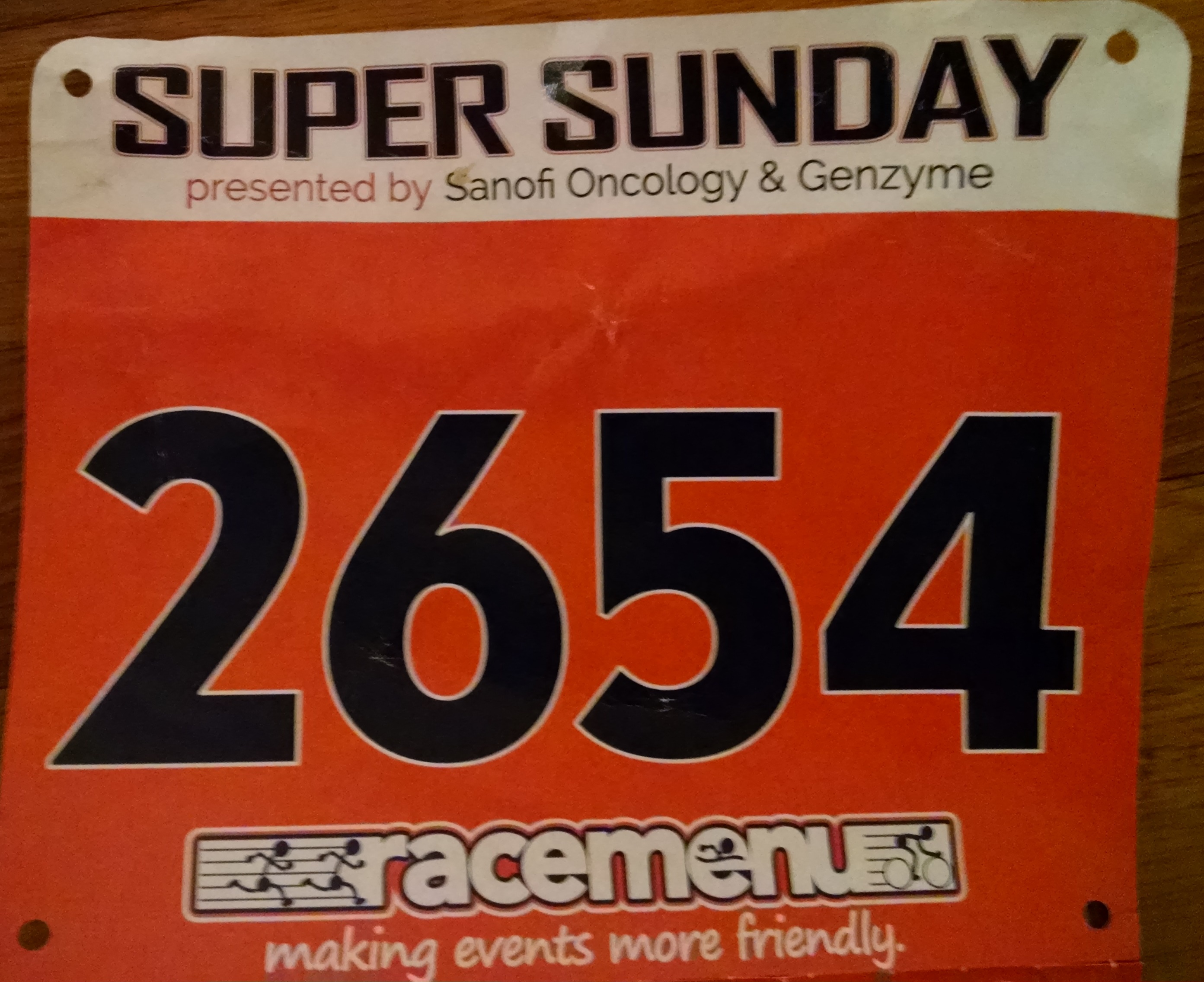
February Race Bib

February races can be hard to find in the north – ice, snow, cold can make it tough to hold a race. But I found one, on Super Bowl Sunday. It was the Super Sunday 5K/5-Miler Present by Sanofi Oncology & Genzyme. The race was organized by the Race Cancer Foundation to raise money to fight cancer.

It’s funny how a single run can leave you with a variety of thoughts about registrations, first races, and race organization. The weather was clear but cold, and just after a blizzard.

Let me start with my thoughts for race organizers. It is nice to have a race to do in February, especially when your goal is to run a race in every month of the year. But if the temperatures are cold and number pick up more than a half an hour before the race, then there needs to be some place warm for the runners to wait for the start of the race. The staging area was outside of the Sanofi Oncology & Genzyme building, but the woman in the lobby was very clear that only employees with badges could wait inside. The rest of us clustered in a nearby parking garage until the fire department kicked us out of there. Surely the race sponsor could have sponsored us by letting us wait in the building, right?

Also, a recurring issue that I have noticed in New England road races is that the courses don’t seem to be fully closed. More than once, this race included, there have been places where cars are driving across the race course – here it was right before the finish line! I know getting roads closed or partially closed can be a problem, but I have run road races in big cities like Chicago, and the courses are completely closed. Also, based on the grumbling of the drivers that I could hear, they did not seem to know ahead of time that there would be a race. It makes sense to notify the neighborhood that a race will be held. That gives people a chance to plan around it and get out ahead of time.

So, race organizers should build heated tents and flyers into their race plans.

After I was finished and heading home, I noticed some people who were still on the course. Let me say this to beginning runners – don’t make a winter race your first race. The cold, snow, and ice, add a level of misery that can detract from how fun races can be. The course is more treacherous, the running harder, and no one really wants to hang around for an after party outside when there is wind chill. If your first race was a winter race and you think 5Ks are a drag, don’t give up. Sign up for one in a warmer month. It will give you and excuse to stick with the New Year’s Resolution that probably led you to the cold race.

Finally, in regards to registration – this one had a team option. I registered for the Donohue’s Bar and Grill team since I like to go there. Then it occurred to me that the team might be racing for a particular time or placement among all the teams. While I was good intentioned and wanted to show my support, I probably should not have done it without checking with the team first. Looking at the times, I don’t think I hurt them at all, but still, in hindsight, I should not have invited myself to their party without asking first.

So, how did the race go? I had a chip time of 26:38 and a gun time of 27:20, both of which were a little faster than my New Year’s Day race. I was 11 out of 28 in my age group. This was good considering my inconsistent running. Having several feet of snow here in Boston will make training for the next one tough, but I plan to find a way. Any advice?


Posted in Races | Tagged , , , , , , | Leave a comment

Digressions – Running, Resolutions, and Body Image: We Don’t Look Like That

It is New Year’s resolution season, so I want to take a moment to talk about how we see ourselves. Many people take up running and set a 5K as a goal because they want to lose weight and look better. We are constantly bombarded by images about how we are supposed to look and feel about our own bodies. The fact of the matter is, most of the messages we receive are designed to make us insecure so that we will buy something to assuage that insecurity.

Several years ago, I did the Navy Seals Fitness Challenge. The Navy took SEALs around to several cities to put civilians through the initial physical fitness test of swimming, push-ups, sit-ups, pull-ups, and running (in that order). I will talk about this more in detail in a future post, but for now, I want to show you how I looked on the day of the test, after some intense training.

Six Pack Abs

Not too shabby, right? If you look closely, I even have a six pack! It was the moment where I was in the best shape of my life. (So far, at least. I hope to surpass this level in the future.)

But here’s the deal, I didn’t really look like that. Take a look at this next picture, which was taken a few minutes later.

Keg Abs

Wait, who’s that fat guy? That’s me! How is that possible?

It’s possible because that is how our bodies are. We can look very different in a matter of seconds depending on how we stand, what we are wearing, or a whole host of other things. This is why we can’t trust pictures – even when they are not photoshopped or claim to present “real beauty.”

This is not just me, by the way, take a look at this blog by Olympic 5K runner Lauren Fleshman on the same topic: http://asklaurenfleshman.com/2013/11/keeping-it-real/ (Actually, if you are interested in running, dig into her blog. There is a lot of great stuff there.) Her pictures show much the same thing.

Here’s the deal, though, whether my belly was a six pack or a keg, I felt great and could really move. I was in better condition than I ever thought possible. Despite the nice swimsuit pic, what I really want is not the waistline, but the swim time and the run time.

As we run through our miles of trials towards our resolutions, we should try to focus on the important parts of making ourselves healthier and stronger. We should forget about the magazines, mirrors, and scales. Let’s judge ourselves by our own standards starting with how we feel and move. The rest of it will follow us down the trails and end up in the right place as long as we keep moving.

Posted in Digressions | Tagged , , , , , , | Leave a comment

Gear – How to Tie Your Shoes

I ran across this Ted Talk about how to tie your shoes. I don’t know the physics behind the strong form of the shoe knot, but I am sure that there is a force or free body diagram that could be done to explain it. If anyone wants to send me one, I would be happy to post it.

Here is the video.

Posted in Training | Tagged , , | Leave a comment

Races – Race Plans and Results (2014/2015)

For runners formal races provide the opportunity to focus training, set goals, and be part of a running community. Whether the goal is to finish a race, get in better shape, or compete, organized races can bring additional elements of fun to anyone’s running.

Last year, my goal was to run a race each month, focusing on the 5K distance, but making allowances for a few variations on the theme. The table below shows the races and results for 2014. This year, my goal is much the same, but my goal is to become steadily faster over time. A plan for 2015 is further down. This will involve more structured training than I am doing now, but that is part of the purpose for this blog. One important aspect to training is keeping track as part of maintaining consistency.

A couple of notes on the 2014 record are in order here. I will get into the details of some of these race categories in later posts, but a few points of clarification are in order. The Raid Series were obstacle course races that I did as part of a team and ran with the team. (Running with other people will come in on a later blog, as will obstacle course racing.) The biathlons listed here are summer versions of the Winter Olympic sport. It is made up of running and shooting, instead of skiing and shooting. This is a fascinating form of racing, and I will devote future posts to it.

Month (2014)          Race                                                                      Time        Pace/Mile
January                    Needham New Year’s Day 5-K                                    23:41              7:38
February                  Waltham YMCA Valentine’s Indoor 5K                    26:31              8:33
March                       Cambridge 5k Craicfest                                                25:40              8:11
April                         Watertown Police Department Finish Strong 5K    27:49              8:57
May                           Thoreau 5K                                                                     23:49              7:39
June                          Raid Series Urban Raid Portland                           1:02:51             20:13
July                           Cambridge 5KSasquatch Trail Race (2.35 miles)   20:55               8:54
August                      Pemi Biathlon                                                                39:07               N/A
September               Raid Series, Beach Raid                                           1:10:09              22:33
October                    Pemi Biathlon                                                                N/A                  N/A
November                Donohue’s Bar and Grill Turkey Trot                      26:07                8:24
December                A Christmas Story 5-K                                                 24:32               7:55

For 2015, I am already registered for several races, which are listed below with the dates. There are several that I ran in 2014, and as far as I know, the courses will be the same. This means there will be a basis for comparison from year to year. With training and luck, I will be able to continue to fill in this table and show improvements in times.

While they don’t appear on the grid yet, I do plan to run future biathlons, obstacle course races, and I also plan to run the Sasquatch Trail Race if the schedule works out. If it works out, then there may also be some orienteering in the race schedule. Clearly I still need to find some races.

Month (2015)            Race                                                Date                                      Time
January                      Needham New Year’s Day 5-K         1/1/2015                                    27:34
February
March                         Cambridge 5k Craicfest                   10/15,/2015, 9:30 a.m.
April
May
June                             Cambridge 5K Freedom Run          6/7/2015, 9:30 a.m.
July
August
September
October                        Cambridge 5K Octoberfest            10/4/2015, 9:30 a.m.
November
December                   A Christmas Story 5-K                     12/5/2015, 9:00 a.m.
December                   Cambridge Yulefest                         12/13/2015 , 9:30 a.m.

My overall goal is to make my race times consistently in the 23-minute range and shorter. If possible, I would like to cut a few minutes off of the consistent race time. To be able to run in the 20-minute time range would mean that in some races I could win my age group. While the main goal is always to beat my previous times, I wouldn’t mind a win like that.

What goals to you have? Did you set stretch goals, shoot for reasonableness, or base them on something else entirely? It will be interesting to compare notes on goals and training as the race season develops.

Posted in Races, Uncategorized | Tagged , , , , , | 1 Comment